

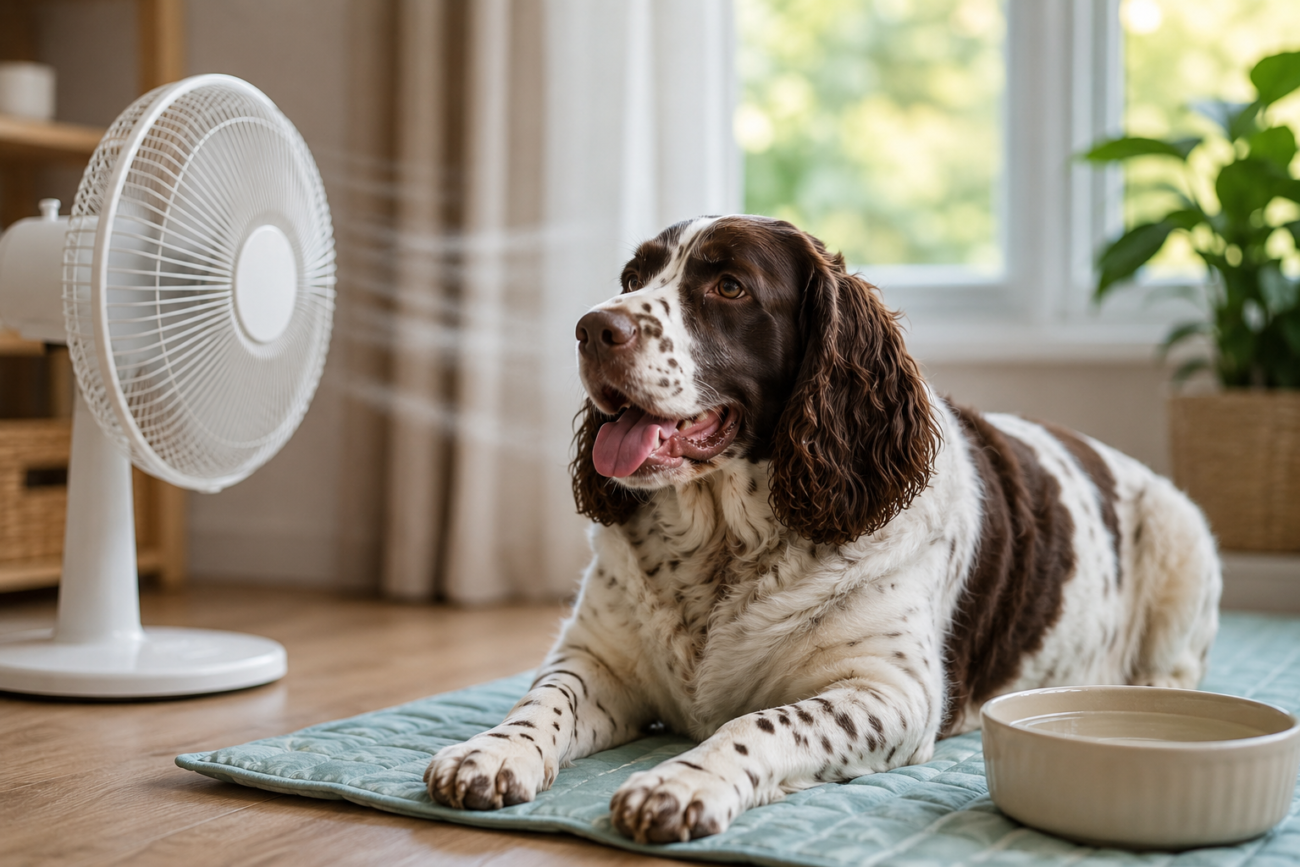
When temperatures climb above 30°C, many dog owners worry about keeping their pets comfortable while they are away from home. If you are wondering whether leaving a fan on for your dog is safe, the short answer is that it can help in some situations, but it should not be your only cooling solution. This is especially true for overweight dogs, older pets, and breeds that may struggle more in hot conditions.
A very overweight English springer spaniel may be at greater risk of overheating, as excess body weight makes it harder for dogs to regulate body temperature. While a fan may improve airflow and create a more comfortable indoor environment, understanding both the benefits and potential risks is essential before leaving it running unattended.
How Effective Is a Fan for Keeping Dogs Cool?
Unlike humans, dogs do not cool themselves mainly through sweating. They regulate heat through panting and limited sweat glands in their paws, which means a fan does not cool them in exactly the same way it cools people. However, moving air can still help reduce discomfort and support evaporation during panting.
For a dog resting indoors with access to shade, fresh water, and cooler surfaces, a fan can contribute to temperature control. It may make the room feel less stuffy and help prevent warm air from becoming trapped, especially during a summer afternoon.
That said, a fan alone is not enough in extreme heat. If indoor temperatures become dangerously high, circulating hot air will not prevent heat stress. In very warm homes, proper ventilation, closed blinds, and alternative cooling methods become far more important.
Fire Safety and Practical Risks of Leaving a Fan Running
Many pet owners worry about electrical fire hazards when leaving appliances switched on while they are out. A modern fan in good working order is generally low risk, but older models, damaged cords, overloaded plug sockets, or excessive dust build-up can increase the chance of overheating.
Placement matters significantly. A fan positioned too close to curtains, bedding, or unstable furniture could become a hazard if knocked over. Dogs left alone may accidentally bump equipment, chew cables, or move nearby objects, creating unexpected risks.
If you choose to leave a fan running, inspect the appliance carefully beforehand. Ensure the plug is secure, the cord is protected, the fan stands on a flat stable surface, and airflow is unobstructed. Avoid extension leads where possible, as these may create additional electrical concerns.
Oscillating tower fans or enclosed bladeless designs may offer better safety compared with exposed blade units, particularly in homes with active pets. Reliable equipment from trusted manufacturers tends to be safer than ageing or cheap electrical devices.
Extra Precautions for Overweight Dogs in Summer Heat
Overweight dogs face increased risk during hot weather because extra body fat acts as insulation, trapping heat and placing more strain on breathing. An English springer spaniel with reduced fitness may overheat faster than a lean, active dog in the same room.
Signs of overheating include excessive panting, drooling, lethargy, weakness, bright red gums, vomiting, or confusion. Heatstroke in dogs can escalate rapidly and may become life-threatening within a short period if temperatures continue rising.
If your dog already struggles in warm weather, leaving them alone during peak heat deserves careful thought. A few hours may be manageable in a cool house, but a poorly ventilated property can become unsafe much faster than many owners realise.
In higher-risk cases, arranging for someone to check in, shortening your time away, or choosing a cooler supervised environment may be the safest option for your pet’s wellbeing.
Safer Ways to Keep Your Dog Comfortable While You Are Out
Creating a cooler indoor setup works best when several methods are combined rather than relying on one single solution:
- Provide multiple bowls of fresh water in different areas of the house;
- Use cooling mats or damp towels in shaded resting spots;
- Close blinds or curtains where direct sunlight enters the room;
- Keep windows safely open to improve airflow if security allows.
Frozen treats designed for dogs can also help before you leave, provided they suit your pet’s diet. Some owners use pet-safe cooling vests, though effectiveness depends on humidity and indoor conditions.
Air conditioning is generally far more effective than a fan when temperatures become extreme. If unavailable, choosing the coolest room in the house and limiting heat build-up can make a meaningful difference.
Monitoring room temperature with a smart thermometer can provide additional reassurance, especially during unusually hot summer days when indoor heat may rise unexpectedly.
Final Verdict for Dog Owners Facing Hot Weather Plans
Leaving a fan on for your dog is usually acceptable if the appliance is modern, stable, clean, and positioned safely away from hazards. However, it should be viewed as a supporting comfort measure rather than a guaranteed safeguard against overheating.
For a very overweight dog during 30°C+ weather, the bigger concern is overall heat exposure rather than the fan itself. If there is any doubt about indoor temperatures becoming too warm, arranging supervision or a cooler alternative would be the more responsible choice.


