

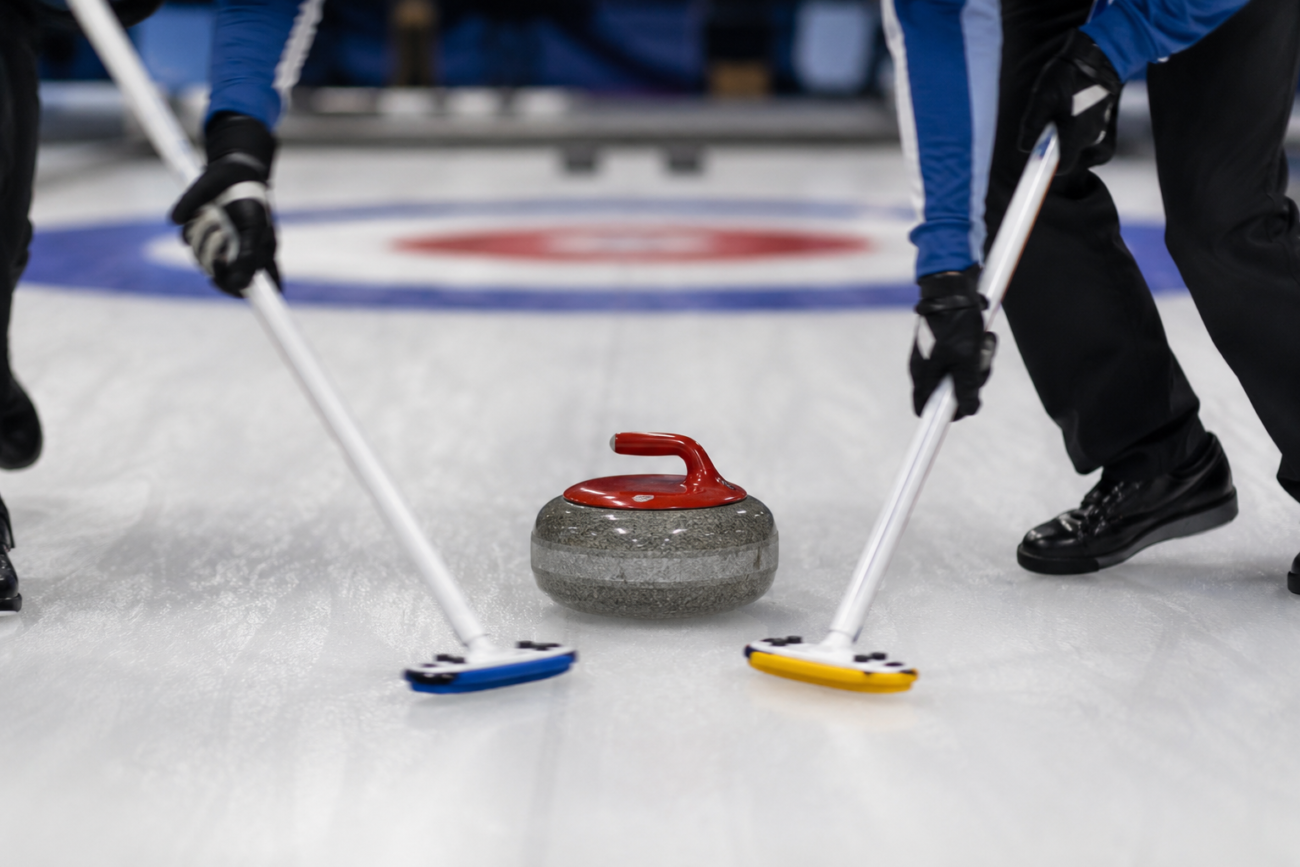
Olympic curling may appear calm and controlled, yet every shot depends on precise physics, teamwork, and timing. One of the most fascinating elements of the sport is sweeping, where players use specialised curling brushes to influence the movement of the stone across the ice. While many viewers focus on the throw itself, experienced curlers know that brushing can completely change the final outcome of a shot.
Modern curling brushes are not simply tools for cleaning the ice. In professional competitions, including Olympic curling tournaments, sweeping techniques help manage speed, distance, and the amount of curl. Understanding how brushes affect the stone’s trajectory reveals why elite curling teams spend years perfecting this critical skill.
The Science Behind Sweeping in Competitive Curling
When curlers sweep the ice in front of a moving stone, friction between the brush head and the ice surface generates heat. This slight warming reduces resistance and creates a smoother path. As a result, the stone travels farther and maintains greater momentum throughout the shot.
The effect may seem minor, but even tiny adjustments matter in Olympic-level curling. A few centimetres can determine whether a stone lands perfectly inside the house or drifts into a guard. Professional athletes use brushing intensity and timing to control these narrow margins with remarkable accuracy.
Another important factor is the pebble texture on curling ice. Curling sheets are sprayed with droplets of water that freeze into tiny bumps. These pebbles create friction and allow the stone to curl naturally. Sweeping partially melts the tops of these bumps, reducing their influence on the stone’s rotation and path.
Researchers studying curling mechanics discovered that vigorous brushing can alter both speed and directional movement. Fast, powerful sweeping often keeps the stone straighter for longer, while reduced sweeping allows natural curl to increase toward the end of the shot.
Why Olympic Curlers Sweep So Aggressively
Viewers often notice Olympic curlers sweeping intensely while shouting instructions across the rink. This communication is essential because sweepers react in real time to the stone’s speed, weight, and projected finish. Every second matters once the stone leaves the thrower’s hand.
Elite sweepers apply considerable downward force through advanced curling brooms designed for maximum efficiency. Modern brush materials create more controlled friction than older equipment, helping athletes manipulate the ice more effectively during crucial moments of play.
Strong sweeping is especially important during draw shots, where precision matters more than power. By reducing drag, sweepers can help a slightly weak shot reach the intended scoring area. Without proper brushing, the stone might stop short and leave the team vulnerable.
In takeout shots, brushing serves a different purpose. Instead of maximising distance, players often sweep to hold a straighter line. This prevents excessive curl and increases the chance of striking the target stone accurately.
Teams also adjust their sweeping style depending on ice conditions. Olympic ice changes throughout a match due to temperature, humidity, and repeated gameplay. Experienced curlers constantly analyse these conditions and adapt their brushing strategy accordingly.
How Curling Brushes Influence Speed and Curl
Two main elements define a curling stone’s movement: velocity and curl. Sweeping directly affects both. Faster sweeping reduces friction, helping the stone maintain speed over a longer distance. This is why players immediately begin brushing if they sense a shot is underthrown.
Curl refers to the curved path created by the stone’s rotation. A clockwise or counterclockwise spin gradually causes the stone to bend across the ice. Sweeping limits this sideways movement by smoothing the pebble surface in front of the stone.
Interestingly, brushing one side of the stone’s path more aggressively can subtly influence direction. While regulations prevent extreme manipulation, skilled sweepers still use angle and pressure to guide difficult shots within legal limits.
Olympic teams train extensively to synchronise sweeping rhythm and body positioning. Effective sweeping is not random movement. Athletes coordinate speed, pressure, and brush angle to produce consistent results under competitive pressure.
Modern sports science has transformed sweeping into a technical discipline. Teams analyse data from previous matches, study ice behaviour, and refine brush techniques to gain small but valuable advantages against top international opponents.
The importance of controlled brushing became so significant that the World Curling Federation introduced regulations on brush materials. Some fabrics created excessive directional effects, leading officials to standardise approved equipment for fair competition.
Key Situations Where Sweeping Changes the Outcome
Not every curling shot requires identical sweeping tactics. Teams choose different approaches depending on strategy, score, and stone placement. Understanding these situations explains why brushing remains one of the sport’s most tactical components.
During high-pressure Olympic matches, sweepers constantly listen to instructions from the skip. Communication allows the team to decide whether to increase sweeping intensity, stop brushing entirely, or focus on maintaining a specific line.
Several common scenarios demonstrate how curling brushes influence the stone’s path:
- Sweeping early helps a slow stone travel deeper into the house;
- Aggressive brushing can reduce the amount of natural curl;
- Controlled sweeping improves accuracy during takeout shots;
- Late sweeping adjustments may rescue slightly inaccurate deliveries.
Because matches are often decided by one or two shots, successful sweeping can become the difference between winning and losing. Olympic curlers rely on instinct, experience, and technical training to make these split-second decisions effectively.
The Evolution of Curling Brush Technology
Traditional curling brooms were once made with corn straw or horsehair, offering limited control over the ice surface. As competitive curling evolved, manufacturers introduced synthetic brush heads designed for durability and improved performance.
Modern Olympic curling brushes are lightweight, aerodynamic, and engineered for maximum pressure transfer. Carbon fibre handles and specialised fabrics allow athletes to sweep harder while conserving energy during long matches.
Technological improvements also changed how teams approach strategy. With more efficient sweeping equipment, curlers can influence stones more precisely than previous generations. This evolution increased the speed and tactical complexity of professional curling.
At the same time, governing bodies carefully monitor new equipment developments. Officials aim to balance innovation with fairness, ensuring brushing skill remains more important than technological advantage alone.
Today, sweeping represents a combination of athletic power, technical understanding, and strategic awareness. Olympic curling teams invest heavily in coaching, conditioning, and equipment testing to maximise their brushing effectiveness during elite competition.
Although the stone throw attracts much of the audience’s attention, sweeping often determines the final result. The relationship between curling brushes, ice conditions, and stone movement highlights the remarkable depth hidden within this seemingly simple winter sport.
From controlling speed to reducing curl, brushing plays a decisive role in Olympic curling strategy. The next time you watch elite curlers racing alongside a moving stone, it becomes easier to appreciate the precision, science, and teamwork involved in every sweep across the ice.