

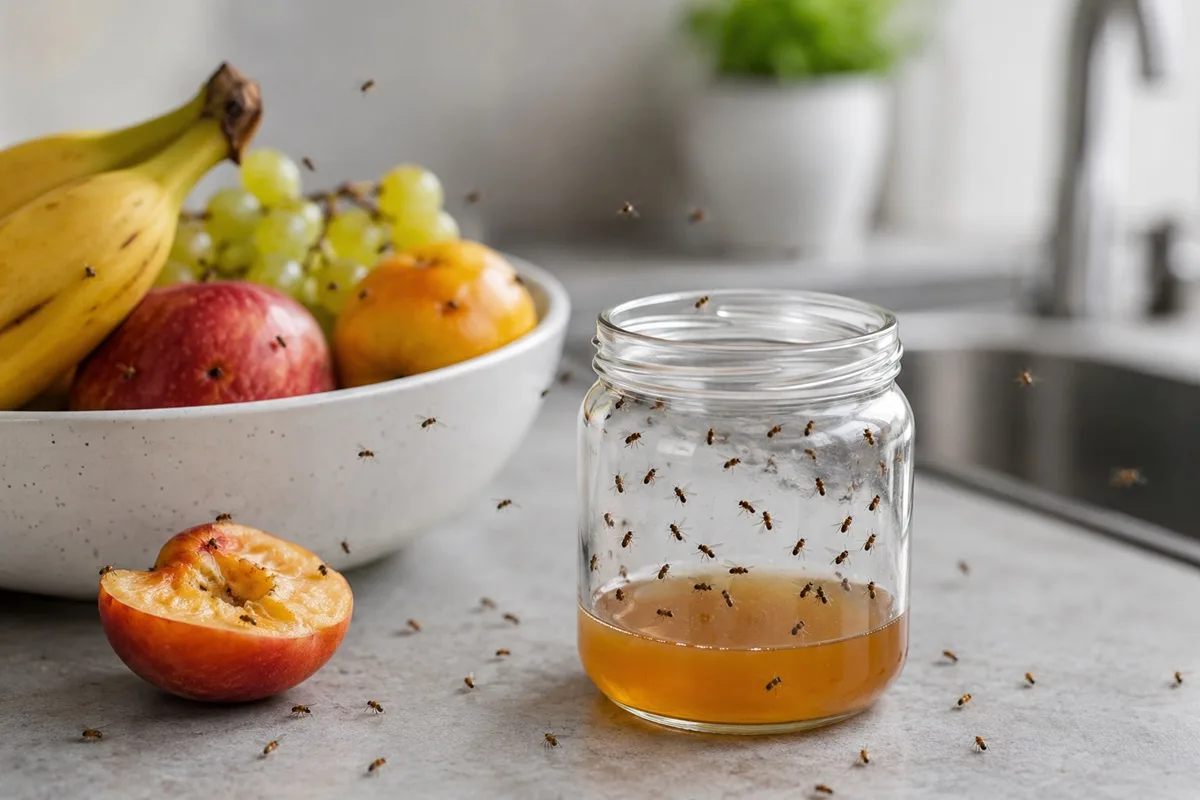
Fruit flies are one of the most common household pests in the UK, especially during spring and summer. They seem to appear overnight around fruit bowls, kitchen bins, recycling containers, and sink drains. While they do not bite or cause serious harm, they can quickly become a nuisance when their numbers increase.
If you are searching for how to get rid of fruit flies, the most effective approach is to eliminate both the adult insects and their breeding sources. Simply swatting the flies you can see is rarely enough. To solve the problem permanently, you need to understand what attracts them and how they reproduce.
What Causes Fruit Flies in the House?
Fruit flies are attracted to fermenting fruits, vegetables, sugary liquids, and organic waste. Even a small amount of food residue can provide enough nutrients for these insects to lay eggs and multiply. Overripe bananas, apples, grapes, and food scraps are particularly attractive.
Many people assume their kitchen is clean, yet fruit flies can breed in hidden places. Damp mops, dirty cloths, recycling bins, compost containers, and sink drains often contain organic matter that serves as a food source. A few unnoticed eggs can develop into dozens of adult flies within days.
Warm temperatures accelerate the fruit fly life cycle. During hot weather, eggs can hatch quickly, allowing infestations to grow faster than many homeowners expect. This is why fruit fly problems are especially common during heatwaves and the summer months.
Common Places Where Fruit Flies Breed
Before attempting to remove fruit flies, it is important to locate the source. Adult flies are usually seen flying around windows or food, but the actual breeding area may be elsewhere. Identifying the source dramatically improves your chances of eliminating the infestation.
The most common breeding locations include kitchen waste bins, food recycling containers, fruit bowls, compost caddies, bottle storage areas, and drains. Moist environments containing decaying organic material are particularly attractive because they provide ideal conditions for eggs and larvae.
How to Get Rid of Fruit Flies Quickly
The fastest way to reduce a fruit fly infestation is to combine cleaning with trapping. While traps help capture adult flies, cleaning removes the breeding grounds that allow the population to continue growing.
A simple homemade fruit fly trap can be surprisingly effective. Fill a small bowl with apple cider vinegar and add a drop of washing-up liquid. The vinegar attracts the insects, while the soap prevents them from escaping once they land on the surface.
You can also place vinegar inside a jar covered with cling film. Poke several small holes in the top. Fruit flies enter easily but struggle to find their way out. This method can significantly reduce the number of adult flies within a few days.
For larger infestations, commercial fruit fly traps may provide faster results. These products are designed specifically to attract and capture flying insects and can be useful alongside regular cleaning and sanitation efforts.
Deep Cleaning Problem Areas
Cleaning is the most important step when dealing with fruit flies. Even the best traps will fail if the insects continue to find suitable breeding locations. Start by removing all overripe fruit, vegetables, and food waste from the affected area.
Wipe kitchen surfaces thoroughly, paying attention to areas behind appliances and under cupboards where food particles may accumulate. Sticky spills from juice, wine, beer, or soft drinks should be cleaned immediately because they can attract fruit flies for days.
Bins and recycling containers should be washed using hot water and detergent. Many infestations continue because small amounts of residue remain inside containers, creating an ideal environment for egg laying.
Do not forget the sink drain. Organic build-up inside pipes can attract fruit flies and support breeding. Flushing drains with hot water and an appropriate drain cleaner can help remove hidden food sources.
Natural Remedies for Fruit Flies
Many homeowners prefer natural fruit fly control methods instead of chemical sprays. Fortunately, several household ingredients can help reduce fly numbers without introducing harsh chemicals into the home.
Apple cider vinegar remains the most popular natural solution because its scent closely resembles fermenting fruit. Red wine, beer, and fruit juice can also be used as attractants in homemade traps.
Some people use essential oils such as peppermint, eucalyptus, or lemongrass near problem areas. Although these products are unlikely to eliminate an infestation on their own, they may help discourage flies from gathering in certain locations.
Fresh herbs such as basil and mint are sometimes placed near windows and fruit storage areas. Their strong aroma may make the environment less attractive to insects while adding a pleasant scent to the kitchen.
How to Prevent Future Fruit Fly Infestations
Prevention is much easier than dealing with a large infestation. Once fruit flies have been removed, maintaining good hygiene habits can significantly reduce the chances of them returning.
Store ripe fruit in the refrigerator whenever possible. Chilled produce is less attractive to fruit flies and slows down the fermentation process that draws them into the home.
Regularly inspect fruit and vegetables for signs of spoilage. Removing overripe produce before it starts to ferment eliminates one of the main reasons fruit flies appear indoors.
Kitchen bins should be emptied frequently, especially during warm weather. Food waste left sitting for several days creates ideal breeding conditions and can quickly attract a new wave of insects.
To reduce the risk of future infestations, follow these simple steps:
- Store fruit and vegetables correctly;
- Empty food waste bins regularly;
- Clean kitchen surfaces and appliances thoroughly;
- Wash recycling containers to remove residue;
- Maintain clean sink drains and pipework;
- Remove spoiled food as soon as possible.
Mistakes That Keep Fruit Flies Coming Back
One of the most common mistakes is focusing only on visible flies. Adult insects represent only a small part of the problem. If eggs and larvae remain in hidden locations, the infestation will continue regardless of how many flies are removed.
Another mistake is ignoring drains and recycling bins. Many people clean their worktops but forget these areas, allowing fruit flies to keep breeding out of sight. A comprehensive cleaning routine is essential for long-term success.
How to Keep Fruit Flies Away for Good
Fruit flies may be small, but they can become a major annoyance when left unchecked. The most effective way to get rid of fruit flies is to combine traps, deep cleaning, proper food storage, and regular waste removal. Addressing the source of the infestation is always more effective than dealing with the symptoms.
By maintaining a clean kitchen, storing produce correctly, and removing potential breeding sites, you can eliminate fruit flies and keep them from returning. Consistent prevention remains the best defence against future infestations and helps ensure your home stays fresh, hygienic, and pest-free.